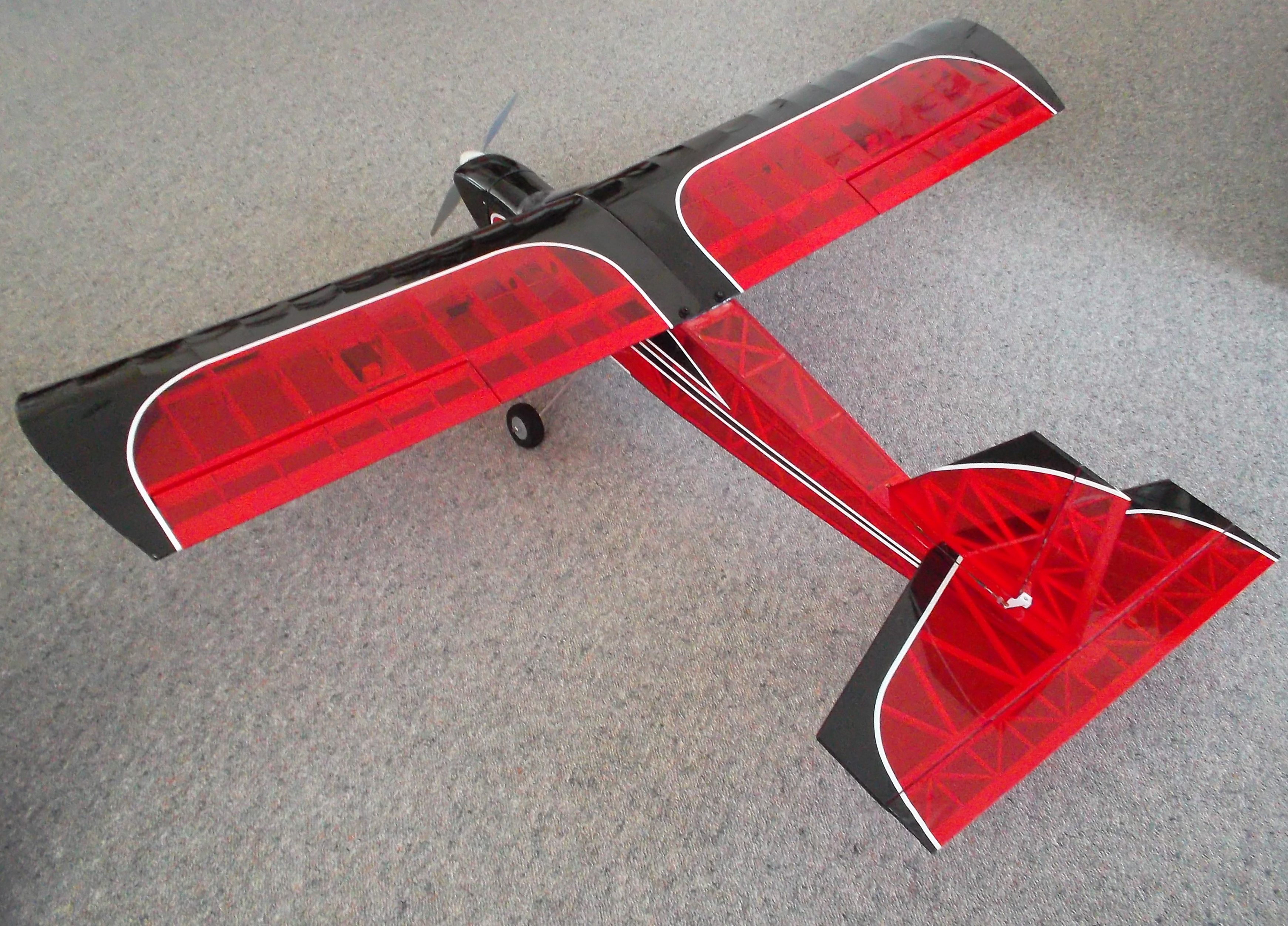
E-flite Apprentice STS 1.5m: the ultimate RC trainer for learning to fly
Full review of the E-flite Apprentice STS 1.5m, the high-wing trainer with SAFE technology, SmartTrainer, and panic mode. Real specifications, pros and cons, flight test, and verdict for those taking their first steps in RC model aviation.
If there's one model that in recent years has become synonymous with a first radio-controlled airplane, that model is the E-flite Apprentice STS 1.5m. A direct heir to the legendary Apprentice S, this 1500mm high-wing trainer is designed with a precise goal: to get anyone who has never touched a stick into the air, minimizing the risk of turning the first takeoff into a pile of foam. With the STS (Smart Trainer System) acronym, E-flite has brought together three ingredients: deliberately docile aerodynamics, SAFE stabilization electronics, and a wireless training system that allows an instructor to take control in an instant. After thoroughly studying it and flying it, here is our honest review.
Technical Specifications
The Apprentice STS 1.5m is an electric single-engine high-wing model made of EPO foam, robust and easy to repair. These are the main specifications declared by E-flite/Horizon Hobby:
- Wingspan: 1499 mm (approx. 1.5 m)
- Length: approx. 1080 mm
- Wing area: approx. 33.2 dm²
- Flying weight: approx. 1390 g (indicative product weight around 1670 g)
- Material: EPO foam
- Motor: BL15 840 Kv brushless outrunner, 12 poles
- Controller (ESC): 30 A brushless, telemetry-ready (Smart-capable)
- Servos: three 13 g digital servos with metal gears + one 37 g servo, installed
- Flight electronics: Spektrum 3230 (flight controller with SAFE) + Spektrum 4650C serial receiver
- Recommended battery: LiPo 3S 11.1 V 3200-4000 mAh with EC3/IC3 connector (not always included)
- Radio (RTF version): Spektrum DXS 2.4 GHz DSMX transmitter
- Level: 1 — beginner
- Indicative price: around 380-420 € for the RTF version (BNF Basic, without radio and battery, costs less)
The model is available in multiple configurations: RTF (Ready-To-Fly, ready to fly with radio included), RTF Basic (radio included but without battery and charger), and BNF Basic (Bind-N-Fly, to be paired with an existing Spektrum DSMX radio). The right choice depends on what you already have at home.
SAFE Technology and SmartTrainer
The heart of the Apprentice STS is SAFE (Sensor Assisted Flight Envelope) technology. In practice, a control unit with gyroscopes and accelerometers continuously reads the model's attitude and intervenes on the controls to keep it within a safe flight envelope. SAFE offers three modes selectable in flight via a radio switch:
Beginner Mode
This is the most complete safety net. Pitch, dive, and roll angles are limited: no matter how much you push the sticks, the plane won't flip over or dive. Releasing the controls, the model automatically returns to level flight. This is the mode with which anyone can get airborne on the first try.
Intermediate Mode
The attitude limits are expanded, allowing for wider turns and maneuvers. Self-leveling remains active but less intrusive: there's more freedom, but the safety net is still there. It's the natural step up after the first flights.
Experienced Mode
Full manual control, without attitude limits. In this mode, the Apprentice STS is capable of performing loops, rolls, and inverted flight, behaving like a normal sport plane. It ensures you never feel constrained by the model once you gain experience.
Panic Recovery (panic mode)
This is the function that alone justifies the purchase for many beginners. At any time, by pressing the panic button, SAFE immediately returns the plane to level flight, recovering it from any attitude, even if it was in a spin, dive, or disoriented. When you lose sight of the model's orientation — the number one mistake for novices — panic literally saves the plane.
Added to this is the SmartTrainer, Spektrum's wireless buddy-box system. Two compatible DSMX radios connect to each other without a cable: the instructor holds the master radio and can take or give control to the student at any time with a switch. For those learning with a club veteran, it's the safest way to practice: if something goes wrong, the instructor takes back control in a fraction of a second.
In Flight
In the air, the Apprentice STS lives up to its promises. With its wide wing dihedral and low wing loading, it flies slow, stable, and predictable. The 1.5m wingspan compared to smaller trainers pays double: the model is clearly visible even at a distance and handles wind much better than a 1-meter parkflyer, which expands the useful weather windows for training at the field.
In Beginner mode, takeoff is almost trivial: you apply power, gently assist the climb, and the plane climbs on its own, leveling out as soon as you release the sticks. The power of the BL15 brushless motor with the stock propeller is abundant for a trainer — sufficient for decisive go-arounds and for some maneuvers in Experienced mode — without being twitchy. Landing is equally gentle, thanks to a low stall speed that forgives imprecise approaches.
Moving to Intermediate and then Experienced mode reveals a more capable model than expected: wide loops, rolls, and inverted flight are within reach, making the Apprentice a companion you won't abandon after the first week. It's a trainer that grows with the pilot.
Pros
- SAFE with three modes + panic: the most effective combination on the market for learning without destroying the model.
- Wireless SmartTrainer: cable-free buddy-box, ideal for training with an instructor at the club.
- Docile and stable flight, but with room to grow up to basic aerobatics.
- 1.5m size: excellent visibility and good wind handling.
- Robust EPO construction and easy to repair with foam glue.
- Electronics already installed and tested, ESC telemetry-ready.
- RTF/RTM/BNF modularity: buy only what you need.
Cons
- Not cheap: around 400 € for the RTF, more than many entry-level trainers. You pay for the technology, but the budget needs to be considered.
- Mandatory Spektrum ecosystem: the included DXS radio is basic and has few memories; the BNF version still requires a Spektrum DSMX transmitter. Those using other brands are left out.
- Battery not always included (RTF Basic and BNF versions): needs to be budgeted for along with the charger.
- Bulk: with a 1.5m wingspan, it requires space in the car and at home; the wing is detachable, but it's not a backpack parkflyer.
- Dependence on electronics: SAFE is excellent as long as it works; it's still advisable to learn to fly without assistance as soon as possible, in Experienced mode.
Who is it suitable for
The Apprentice STS 1.5m is the model to recommend without hesitation to those starting from scratch and seriously wanting to learn to fly a fixed-wing aircraft. It's perfect for those lucky enough to have an instructor or a club nearby, thanks to the wireless SmartTrainer, but also for the disciplined self-learner who uses panic and Beginner modes as safety nets. It's also suitable for those returning to the hobby after years and wanting to get back in practice safely.
It is not the right choice, however, for those looking for the absolute cheapest model, for experienced pilots seeking pure acrobatic performance, or for those loyal to a radio ecosystem other than Spektrum and unwilling to switch.
Verdict
The E-flite Apprentice STS 1.5m confirms itself as the benchmark in the trainer category. Not because it's perfect — it's expensive, ties you to Spektrum, and isn't the most compact — but because it does exactly what it promises: it gets a beginner flying and accompanies them up to aerobatics, drastically reducing the probability of the classic first-flight crash. The SAFE + panic + SmartTrainer trio is simply the most complete toolkit for learners, and the build quality withstands intense use at the training field.
If the budget allows and you want to learn well from day one, it's money well spent. Our rating: 9/10.